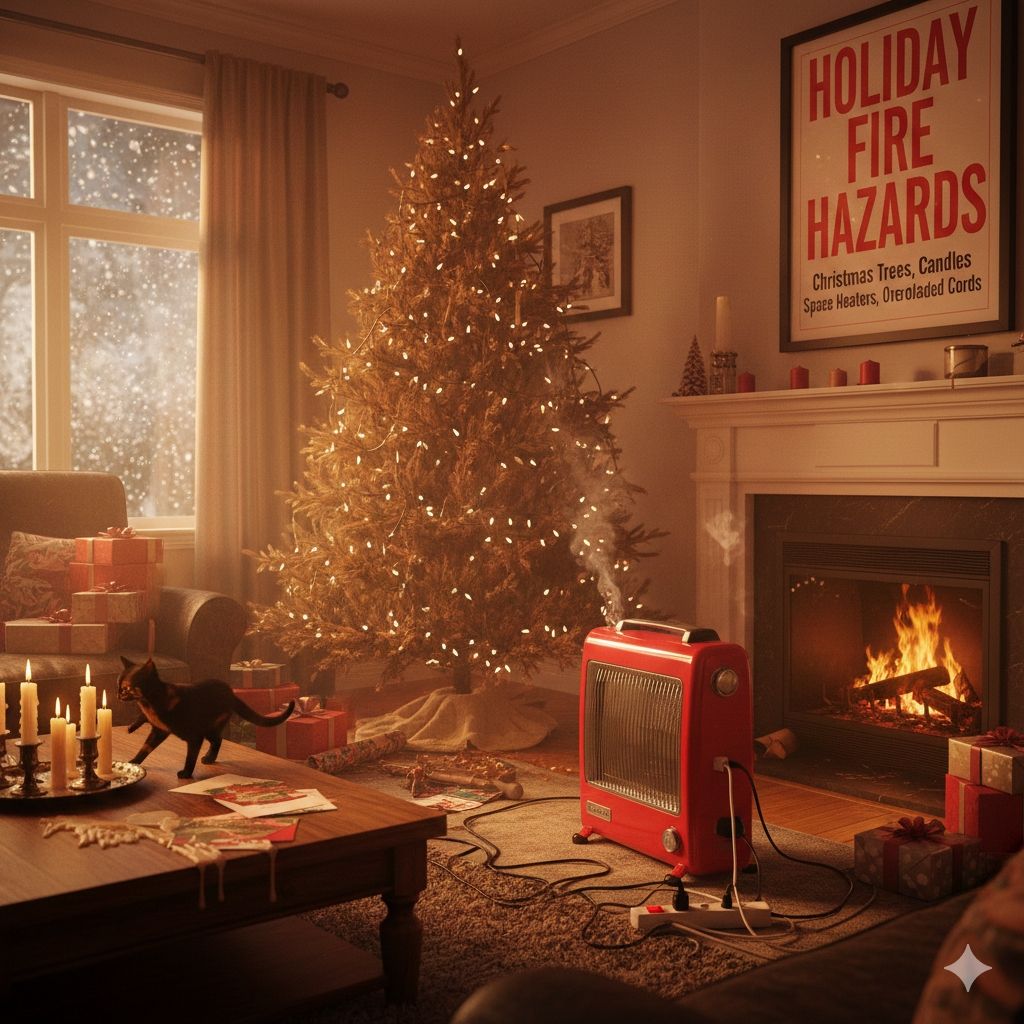
The holiday season is a time for joy, but it also brings more home fires. The National Fire Protection Association (NFPA) says fire departments respond to about 150 home fires each year that start with Christmas trees. And candle fires are most common in December and January.
Don't let a fire ruin your holiday. Here's what you need to know about handling Christmas lights, space heaters, extension cords, and power strips safely.
"One in every 52 reported home fires that began with a Christmas tree resulted in a death, compared to an average of one death per 145 total reported home fires." — NFPA
1. Christmas Tree Safety
A dry Christmas tree is a serious fire risk. It can go up in flames fast.
- Freshness Matters: Pick a tree with fresh, green needles that don't fall off when you touch them.
- Water Daily: Water the tree every day. A dry tree is a hazard.
- Placement: Keep the tree at least 3 feet from any heat (fireplaces, radiators, candles, heat vents).
- Disposal: Get rid of the tree after Christmas or when it's dry. Dry trees are a fire hazard and shouldn't be left in the house or garage.
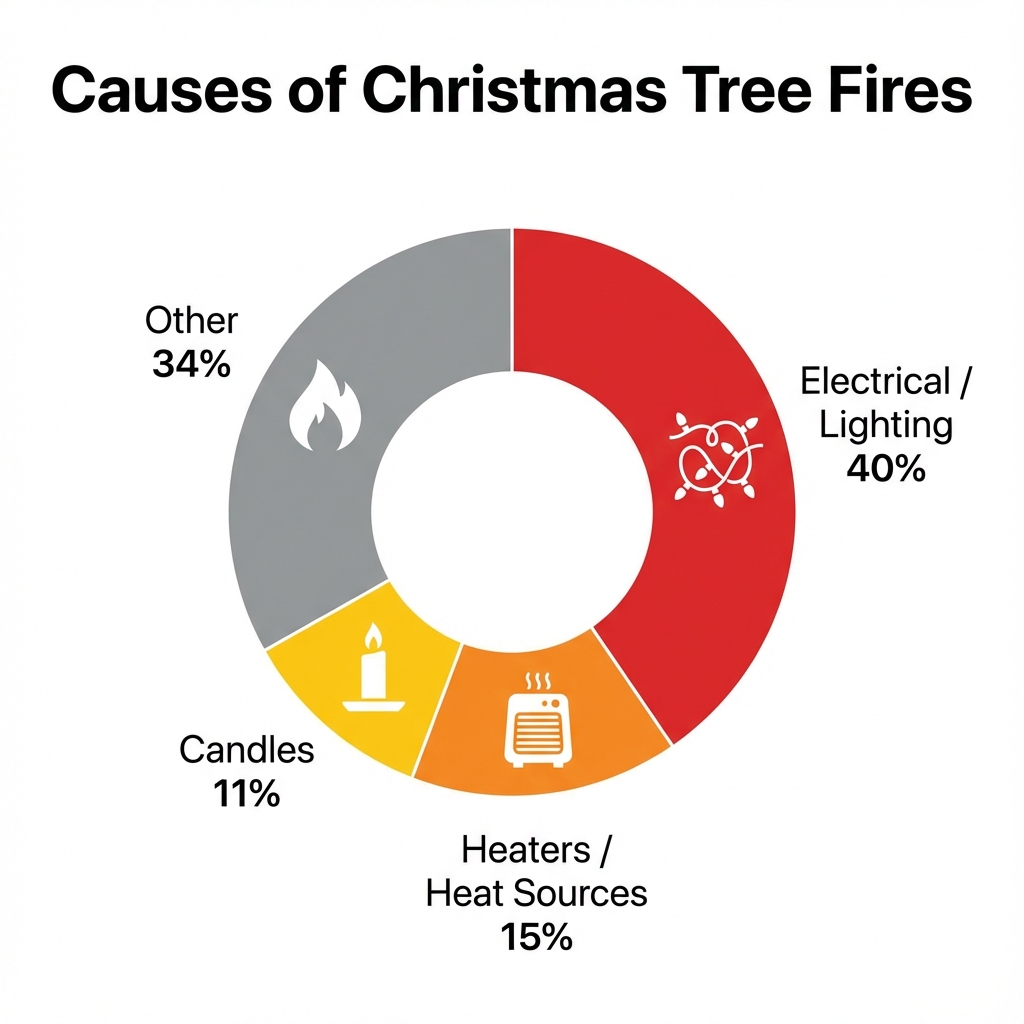
2. Holiday Lights: Inspect & Replace
Whether you use old lights or new LEDs, electrical safety is key.
- Check Your Cords: Every year, look over your holiday lights for frayed wires, bare spots, gaps in the insulation, broken or cracked sockets, and lots of kinking or wear before you hang them.
- Don't Overload: Plug in no more than three standard-size sets of lights per extension cord (unless the box says otherwise—always check!).
- Outdoor vs. Indoor: Use lights made for where you're putting them. Outdoor lights need to handle weather.
- Turn Them Off: Always unplug tree lights and outdoor lights before you leave or go to bed.
For more lighting safety tips, check out the Electrical Safety Foundation International (ESFI) .
3. Extension Cords & Power Strips
Too many things plugged into one outlet is a big cause of holiday fires.
- Power Strips are for Electronics, Not Heaters: Never plug a space heater into a power strip or extension cord. They pull too much power and can melt the strip.
- Don't Daisy Chain: Never plug an extension cord into another one, or a power strip into another power strip. This is a fire risk.
- Keep Them Cool: Don't run extension cords under rugs or furniture. They can get too hot and start a fire.
- Wattage Rating: Make sure your extension cord can handle the power of what you're plugging into it.
4. Space Heaters: Give Them Space
Space heaters cause a lot of home heating fires in the winter.
- 3-Foot Rule: Keep anything that can burn (gifts, wrapping paper, curtains, bedding) at least 3 feet from heaters.
- Plug Directly Into Wall: Like we said before, ALWAYS plug space heaters right into the wall.
- Automatic Shut-off: Use heaters that turn off if they fall over.
5. Candle Caution
Candle fires jump on Christmas Eve, Christmas Day, and New Year's Eve.
- Never Leave Unattended: Blow out candles when you leave or go to bed.
- Stable Base: Use candle holders that won't tip.
- Battery-Operated Options: Think about using fake candles, which look and smell like real ones but don't have the fire risk.
Conclusion
Follow these tips to keep your holiday memories happy. Spend ten minutes today checking your tree's water, looking at your cords, and making sure your space heaters aren't too close to anything. The Consumer Product Safety Commission (CPSC) also has good advice on keeping your family safe.
Stay safe and Merry Christmas from the Smart Home Repair team!